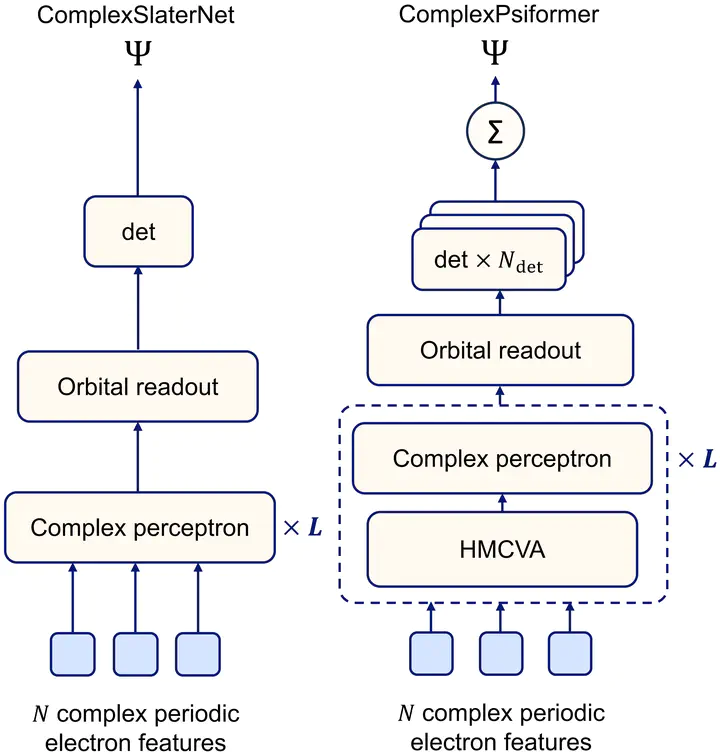
 Construction of the two complex-valued neural wavefunctions.
Abstract
Magnetic many-electron wavefunctions require amplitude and phase to be optimized together. Whether a complex internal representation improves this variational search is a practical question for neural wavefunction design. We introduce Complex Psiformer for interacting electrons in a magnetic moiré continuum, combining complex hidden features and Hermitian-magnitude attention with magnetic boundary conditions and fermionic antisymmetry. After the same number of optimization steps, Complex Psiformer reaches lower energies than Real Psiformer in two finite supercells. Both Psiformers also improve on their respective neural Hartree-Fock references. Across five training seeds in the 25-cell system, the mean Complex advantage is 1.458 meV per electron, with a smaller observed spread. A separately trained two-electron Complex state has a smaller energy gap to a finite configuration interaction reference than its Real counterpart. In the Complex states, flux scans show nonmonotonic density correlations and weaker honeycomb mean-density modulation at higher flux, while connected fluctuations persist. Gauge invariant current maps provide a qualitative comparison of local circulation in the optimized states. These benchmarks support the combined architecture as a variational ansatz for studying energies and charge arrangements in finite magnetic systems.
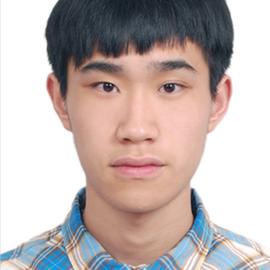
Mingrui Jing
PhD Student (2023)
I obtained my BS and MS degrees in physics from the University of Melbourne. My research interests include distributed quantum computing, quantum entanglement and quantum machine learning.
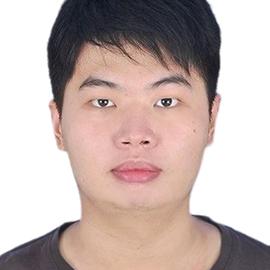
Erdong Huang
PhD Student (2024)
I obtained my BS in Applied Physics from Beijing Institute of Technology, Zhuhai (BITZ). I obtained my MSc degree in Physics from The Chinese University of Hong Kong. My research interests include quantum hardware, quantum information theory and quantum computing.
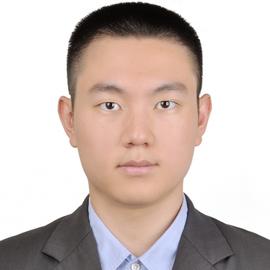
Jizhe Lai
PhD Student (2025)
I obtained my BS in Physics from SUN YAT-SEN University under the supervision of Prof. Yiwen Pan. I obtained my MS degree in Imperial College London under the supervision of Prof. Chris Hull, FRS. My research interests include mathematical physics and quantum computation.

Enji Xiong
Undergraduate Student
I am studying at The Hong Kong University of Science and Technology (Guangzhou). My research interests include quantum information theory and quantum computation.

Xin Wang
Associate Professor
Prof. Xin Wang founded the QuAIR Lab at HKUST (Guangzhou) in June 2023. His research aims to advance our understanding of the limits of information processing with quantum systems and the potential of quantum artificial intelligence. His current interests include quantum algorithms, quantum resource theory, quantum machine learning, quantum computer architecture, and quantum error processing. Prior to establishing the QuAIR Lab, Prof. Wang was a Staff Researcher at the Institute for Quantum Computing at Baidu Research, where he focused on quantum computing research and the development of the Baidu Quantum Platform. Notably, he led the development of Paddle Quantum, a Python library for quantum machine learning. From 2018 to 2019, he was a Hartree Postdoctoral Fellow at the Joint Center for Quantum Information and Computer Science (QuICS) at the University of Maryland, College Park. Prof. Wang received his Ph.D. in quantum information from the University of Technology Sydney in 2018, under the supervision of Prof. Runyao Duan and Prof. Andreas Winter. He obtained his B.S. in mathematics (Wu Yuzhang Honors) from Sichuan University in 2014.