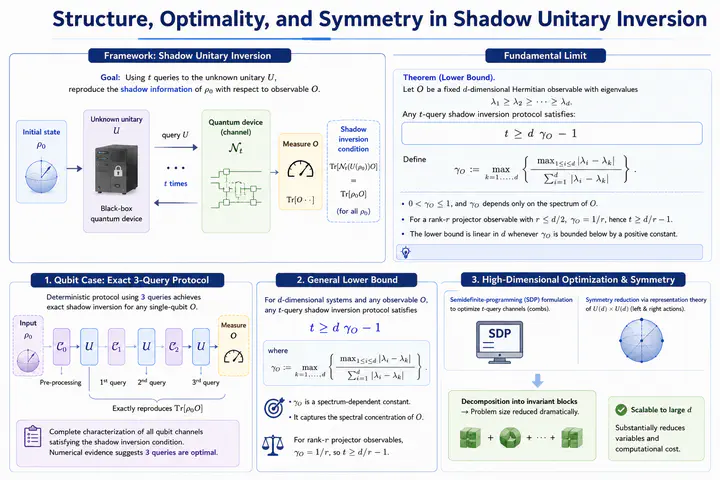
 Schematic overview of shadow unitary inversion
Abstract
Reversing unknown quantum dynamics is vital for quantum control and learning, yet full unitary inversion requires a resource-intensive $\mathcal{O}(d^2)$ queries. Because many applications only require the reversed evolution for a given observable, a critical gap remains in understanding the minimal resources for such targeted reversal. Here, we address this by introducing shadow unitary inversion. We establish a lower bound showing the query complexity must scale at least linearly with system dimension for spectrally biased observables, with the constant determined by the observable’s spectral properties. For qubit case, we construct an explicit, deterministic three-query sequential protocol achieving exact shadow inversion and completely characterize all admissible channels, with numerical evidence suggesting optimality. For higher dimensions, we develop a semidefinite-programming formulation and introduce a representation-theoretic symmetry reduction that decomposes the optimization into invariant blocks, substantially reducing the problem size. Shadow unitary inversion thus offers a resource-efficient path to inverse-dynamics estimation for future quantum control, diagnostics, and learning tasks.
Guocheng Zhen
PhD Student (2025)
I have received my bachelor's degree in mathematics from Wuhan University in 2022 and my master's degree in mathematics from Wuhan University in 2025. My main research is about probability theory, especially Large Random Dimension Matrices Theory. I am exploring the mathematical foundation in quantum information under the guidance of Prof. Xin Wang and Prof. Bartosz Regula.
Yu-Ao Chen
Visiting Scholar
I obtained my BS in Mathematics and Applied Mathematics from University of Science and Technology of China. I obtained my PhD degree in Applied Mathematics from University of Chinese Academy of Sciences under the supervision of Prof. Xiao-Shan Gao. My research interests include quantum computing, symbolic computation and cryptanalysis.
Mingrui Jing
PhD Student (2023)
I obtained my BS and MS degrees in physics from the University of Melbourne. My research interests include distributed quantum computing, quantum entanglement and quantum machine learning.
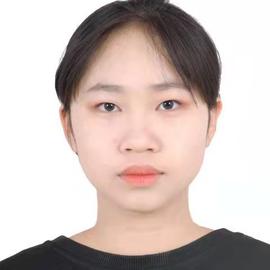
Jingu Xie
PhD Student (2026)
I am currently studying at the Quantum AI Research Lab, Thrust of Artificial Intelligence, Information Hub, The Hong Kong University of Science and Technology (Guangzhou). My research interests include quantum information theory, quantum computation, and applied mathematics.
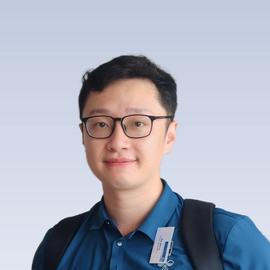
Xin Wang
Associate Professor
Prof. Xin Wang founded the QuAIR Lab at HKUST (Guangzhou) in June 2023. His research aims to advance our understanding of the limits of information processing with quantum systems and the potential of quantum artificial intelligence. His current interests include quantum algorithms, quantum resource theory, quantum machine learning, quantum computer architecture, and quantum error processing. Prior to establishing the QuAIR Lab, Prof. Wang was a Staff Researcher at the Institute for Quantum Computing at Baidu Research, where he focused on quantum computing research and the development of the Baidu Quantum Platform. Notably, he led the development of Paddle Quantum, a Python library for quantum machine learning. From 2018 to 2019, he was a Hartree Postdoctoral Fellow at the Joint Center for Quantum Information and Computer Science (QuICS) at the University of Maryland, College Park. Prof. Wang received his Ph.D. in quantum information from the University of Technology Sydney in 2018, under the supervision of Prof. Runyao Duan and Prof. Andreas Winter. He obtained his B.S. in mathematics (Wu Yuzhang Honors) from Sichuan University in 2014.
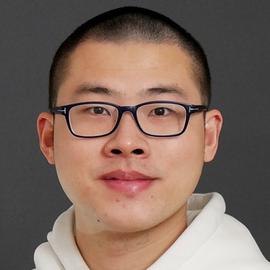
Ranyiliu Chen
Visiting Scholar
I received my doctorate in Mathematics from the University of Copenhagen in 2025, under the supervision of Prof. Laura Mancinska. Previously I obtained my master’s and bachelor’s degrees in 2020 and 2017 respectively, both in electronic engineering from Beihang University. My research interests include quantum information theory, Bell non-locality and quantum machine learning.