Paper accepted by ISCA 2026!
Paper on real-time decoder scheduling for fault-tolerant quantum computation has been accepted by ISCA 2026 🎉
Our paper Triage: An Adaptive Parallel Window Decoding Scheduler for Real-time Fault-Tolerant Quantum Computation by Jiahan Chen, Chenghong Zhu, Ge Bai and Xin Wang has been accepted by ISCA 2026!
For ISCA 2026: The International Symposium on Computer Architecture (ISCA) is a top-tier conference in the field of computer architecture and a CCF-A recommended conference. ISCA is the premier forum for new ideas and experimental results in computer architecture, covering a broad range of topics including processor and memory architecture, parallelism, datacenter-scale computing, IoT, mobile and embedded architecture, power and energy, sustainable computing, and quantum computer architecture.
For the paper Triage: An Adaptive Parallel Window Decoding Scheduler for Real-time Fault-Tolerant Quantum Computations: Fault-tolerant quantum computation requires classical decoders to process a continuous stream of quantum error correction measurement data in real time. As quantum systems scale up, however, limited decoding resources can struggle to serve many logical qubits promptly. This becomes especially costly before non-Clifford operations, where a quantum program may have to wait if error tracking has not finished. To address this challenge, Triage introduces an adaptive parallel window decoding scheduler. It divides correction data into space-time units and builds a constraint relationship graph to coordinate decoding tasks. During regular execution, Triage maintains overall throughput; before critical synchronization points, it switches to an urgent mode and prioritizes the units that most directly affect upcoming logical operations. Compared with standard time-parallel scheduling, Triage reduces the logical error rate by 52.6% on average, providing an effective scheduling approach for real-time classical control in fault-tolerant quantum computation.
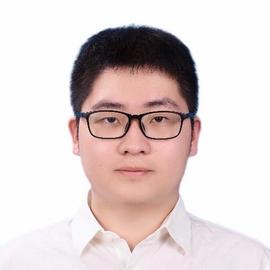
Jiahan Chen
PhD Student (2025)
I obtained my BS in Computer Science and Technology from Xi’an Jiaotong University. I obtained my MS degree in Computer Science and Technology from Harbin Institute of Technology, Shenzhen. My research interests include quantum information theory and quantum error correction.